Skip to content

Guest Post by Jacqueline about the availability, or not, of T3-only meds
The following is written by thyroid patient Jacqueline of the United States, and may be of interest to all of you who use T3 / T3-only, no matter where you live. Her mention of Cytomel is a major brand of T3, but there are other versions.

Let Jacqueline and others hear about your issues with finding T3.

Just spent the better part of two hours trying to locate some Cytomel after Walgreens and Safeway said they and all their distributors (which are used by all the other pharmacies) are out of the 25 mcg size tablets. I have tried to locate Cytomel at least two times in the last 6 months. Earlier, I had been able to locate some in the pipeline of pharmacies and distributors. But not anymore.

Keep in mind that I do not convert T4 to T3 very much ( I do take NP Thyroid for T4, T3, T2, T1). I have tried generic and compounded T3 meds and got nothing from them. So I switched back to Pfizer-branded Cytomel last year with now a HUGE expense as the price is now so high that the formularies do not list it any more, meaning I only get 20% coverage.

Per day, I take two of the 25 mcg of Cytomel by Pfizer, plus 60 mcg (~1 grain) NP Thyroid. I have taken Cytomel for 20 years. To try to save money after Pfizer hiked the price about six (?) years ago, I tried switching to the generics and to compounded T3. But they were very ineffective for me, and I have been dealing with health problems that the attempted switch caused for the last year and a half. I resigned myself to the high expense, but now Pfizer has disrupted the supply, and may now be making changes in how/where it is made. UGH

My experience in trying to reach Pfizer

1. When I tried to send an email to Pfizer via their website, the field keeps saying I have too many characters no matter how many are in the box, so that was a failure.
2. When I called Pfizer Customer Service 800-533-4535 five times today this happened: there is only voice option to respond to questions on the menu, so I said “Product Information”, then “Cytomel”. They cut me off every time. No idea if the call system is broken or the product name triggers the line to be cut.
3. When I called 800-438-1985, I took the section for “Professionals” because that was the only thing that made sense. A service rep took down all my personal information, then found me a customer rep.

What Pfizer’s customer rep stated to me i.e. these “company-lines”:

a. 50 mcg is not being made until March 2019, and is unavailable. (I could use this size of the pills by cutting them in half, would save me the most money, actually.)

b. 25 mcg is not being made until March 2019, and can be ordered by pharmacy drop ship to individual patients. Actually, the manager Safeway’s pharmacy refused to do this for me. My Walgreens pharmacy did it, by going though their distributor, which the customers service rep did not understand would be necessary. Pfizer gives only two bottles per call to the pharmacist, and I got one, another client got the other. I have no idea how long this will take – last time Walgreens ordered a drop ship of Cytomel, it took 3 weeks, acc’g to the gal at Walgreens. This will not last me until end of March, so I have to consider other options, as well. Meanwhile, the old Cytomel pills expire in February!! I have no problem taking them for a while post expiration, but this is all a mess.

c. 5 mcg are back on the shelves. I would have to take 10 pills a day plus maybe 1 or 2 more to compensate for the extra filler in so many pills- thus could cost me, after the piddling 20% insurance coverage, $800 or more per month. This is the most expensive option, but I may need a back-up.

Why the disruption in supply?

Pfizer Customer Rep said that there is some “change in ingredient(s) supplier.” The exact details are considered private “corporate information” LOL. Actually this is CRUCIAL info for docs and their patients. I will consider moving to a different company’s product since there are going to be changes and the timing is not certain or shared with patients.

i. If even one ingredient is being made in a new facility, the formula is different, and may not perform the same. For those of us who depend on something in its exact form, WE NEED TO KNOW THIS.

ii. Since we depend on this product for our health, we need to know the TIMING of this, and whether they DEFINITELY will resume producing this medication.

iii. Reasons for disruption are factors we and docs should know for deciding whether to change to a different version.

My theories about why this happened

1. Price hikes led to removal from formularies (official list giving details of prescribed medicines) led to limited insurance coverage, rather than co-pays, which then reduced demand (I tried to switch away for this very reason, but nothing worked, so I came back despite the insane expense). For example, the first approx. 14 years of taking Cytomel, it was covered by my co-pay. Then the list price went way up A LOT (why? KEY INFORMATION NEEDED BY US as patients who NEED T3). From that point on my insurance only gave me back 20%, so I was paying almost $500/month. When I gave upon on alternatives and went back to Cytomel, I was on T3-only to reduce RT3, so I was actually able to take fewer pills (2 x 25mcg vs. 4x 5mcg in the past), which reduced the cost a bit as it seems to be more based on # pills than #mcg. It is likely that many switched to generics or compounded versions to save money when the price was hiked. The reduced demand would make it less profitable, and harder on the production facility.

2. Cost of raw materials went up? Raw materials in short supply??? How they are looking for alternatives?? If this is the case, the company should be telling us this!!

3. Raw materials supposedly made in Puerto Rico facilities taken out by Hurricane Maria and now unavailable??? If so, Pfizer should be telling us this.

4. 5 mcg are likely the most popular as they are most common usage is to supplement a T4-only synthetic or a Natural Desiccated Thyroid (NDT)) with a little bit of T3. For example. I used to take 150 mg Tirosint (gel-based T4, also very expensive now, so I switched) plus 20 mcg Cytomel. However, when my RT3 went way up (after I was on generic and compounded T3!), I had to take A LARGE amount of Cytomel for T3-only therapy: my theory is that the numbers of people taking such high doses of T3 and/or doing (temporary) T3-only therapy are not that high or constant, so there is is not much demand for the 25 mcg or 50 mcg pills of Cytomel.

Sorry about this long saga, but I hope to help others.

If anyone has any further info about any of this,. or any suggestions, or any relevant experiences, I am very interested.
Please post!!! ~Jacqueline

******************

From Janie: as we wait for more information as well as your comments on this important Guest Blog post, here are links to help you in your quest to feel better..

1) Want to order your OWN labwork because you like being self-directed? Go to this page and scroll down to see the icons for different lab facilities.

2) Have a high RT3? Check out this page.

3) Learn what patients have learned in the use of T3-only.

4) See the different brands of T3 in pink on the Armour vs Other Brands page.

5) Have what looks like a optimal free T3 (top part of range or even higher) but you still feel awful? You may be pooling due to a cortisol issue that needs discovery with a saliva test. Once you get your saliva results back, DO NOT go by their graph. Go by this page.

6) Here’s info on the different thyroid medications: https://stopthethyroidmadness.com/hypothyroid-medications/

NOTE: if you are reading is via the email notification you signed up for, DO NOT REPLY TO THE EMAIL. It will not be received. If you want to comment, CLICK ON THE TITLE of this blog post, then scroll down to comments.


An hypothesis about RT3 – did you know you might have a hidden pool of it?

arrowPlease note this is a OLDER post from 2014, a HYPOTHESIS based on limited information, and not to be taken as gospel. We’re just leaving it here for kicks sake. 

Everyone makes Reverse T3 (RT3)–an inactive thyroid hormone. It’s a way to clear out excess T4 when your body isn’t needing that extra storage hormone. i.e. instead of the T4 converting to the active T3, your body (and specifically your liver), will convert it to RT3. If someone without a thyroid problem gets the flu, up goes the RT3 to conserve energy. If someone has a bodily injury, up goes the RT3 to conserve energy.

And thyroid patients seem to see their RT3 go up in the presence of low iron or a cortisol issue.

But if you think about it, why doesn’t it go down faster when we decrease our T4? T4 has a half life of one week, yet it can take 8 – 14 weeks for RT3 to go down. Hmmmmmm…

Thyroid patient Sebastian from Germany sent me this information about Reverse RT3 that I find fascinating. What do you think?

*******************

I’m studying biology and chemistry and have Hashimoto’s Thyroiditis with high RT3. I just wanted to inform you about an interesting idea/hypothesis I have found.

There seems to be a “hidden pool” of RT3 in the human body. This RT3 pool can increase in size while enough T4 is available, and then secrete RT3 in times where the body needs it but hasn’t got enough T4 to produce it via deodination (the removal of an iodine molecule).

“It is concluded that a hidden pool of RT3 production exists in vivo in man.”
“It would appear that hypertrophy of this hidden pool of rT3 production occurs in high T4 states […]”

Source: LoPresti et al., “Does a hidden pool of reverse triiodothyronine (rT3) production contribute to total thyroxine (T4) disposal in high T4 states in man.”, J Clin Endocrinol Metab. 1990 May;70(5):1479-84. http://www.ncbi.nlm.nih.gov/pubmed/2335581

I have made observations regarding my own thyroid blood tests and the blood tests of other patients that seem to support this hypothesis. I have been on T3-only for 6 weeks now, started with an RT3 of 330 pg/mL at approx. day 0, and now have measured a RT3 of 685 pg/mL (twice as much!), even though my TSH is low, FT4 has fallen rapidly to 0.5 ng/dL, and no T4 medication has been taken for full 6 weeks.
Another patient I know has also made interesting correlations between FT4 and RT3. He isn’t on T3-only, but observed a time-delayed (!) correlation between both values – which could be interpreted as an indicator for the presence of an RT3 storage pool in the body, that grows when enough T4 is available, and sets RT3 free in times when there is less T4 available.

I also found studies which found that RT3 has a 1000 times less feedback on the TSH than T3 has, and 100 times less than T4. This could explain any differences between TSH and symptoms, as the “RT3-system” seems to be almost completely isolated from the thyrotropic regulation system (the latter is that which directly influences the secretory activity of the thyroid gland). RT3 can obviously rise and fall without having (almost) any effect on the TSH.

Source: Cettour-Rose et al.: “Inhibition of pituitary type 2 deiodinase by reverse triiodothyronine does not alter thyroxine-induced inhibition of thyrotropin secretion in hypothyroid rats”, European Journal of Endocrinology (2005) 153 429?434.

In combination, this could explain why the clearing process of RT3 takes approx. 8-14 weeks, although T4 has a plasma half-time of only 8 days, and rT3 only 4.5 hours!

The intracellular T3 receptors aren’t “clogged”, and then suddenly become free after that period of time has elapsed. Instead, RT3 is a competitive inhibitor of T3, meaning it constantly goes in and out of the T3 receptor. You probably know that already.

Patients report feeling well with T3 only dosages of approx. 80-120 µg T3 per day. According to Celi et al., 2010, this would be equal to 240-360 µg of T4. I always wondered why they don’t end up feeling hyper.

This all makes sense now under the assumption that a hidden RT3 storage pool exists somewhere in the body. Although there is no new T4 being produced or taken in, and although the remaining T4 and RT3 have both decayed rapidly after one starts with the T3 only method, there is still alot of RT3 being set free by the storage pool all the time. This storage pool might be big enough to last for several weeks to months. Since RT3 is the competitive inhibitor of T3, this might be why patients are able to tolerate (and even need) so very large amounts of T3.

Then, after the storage pool has been emptied, the remaining RT3 rapidly decays because of its short half-time and no new RT3 can be produced because no T4 is available in the body. Therefore, RT3 concentrations within blood and cells drop. Thus, the competitive inhibition gets a lot weaker at that point, and patients start feeling hyper because the same amount of thyroid hormones (T3) is now significantly increased in its effect, since it can stay much longer in the T3 receptors without being competitively inhibited (kicked out of the receptors) by RT3.

This process of totally emptying the RT3 storage might occur very quickly, therefore the drop in RT3 concentrations is very suddenly, all of which might happen within several days. And this is why patients then get hyper and have to reduce their dosage to half or less of what they’ve taken previously over the 8-14 weeks.

“Clogged receptors” don’t make sense because RT3 is a competitive inhibitor, capable of traveling in and out of the T3 receptor all the time.

“Clearance” occurring after 8-14 weeks, although both educt (T4) and product (RT3) have significantly (!) shorter lifetimes, doesn’t make sense either. Neither does a totally defective TSH lab test, because in principle, it worked fine for all the patient’s lifetime before they got their thyroid disease; and because significant correlations between TSH and FT3 and FT4 can be observed.

This all makes sense to me now, based on two assumptions:

1. While T3 and T4 have a strong negative feedback effect on TSH secretion, RT3’s effect on the TSH secretion is minimal, being about a thousand times smaller in effect than that of T3, and about a hundred times smaller in effect than that of T4….as described in the study of Cettour-Rose et al., 2005, mentioned above.

2. The body has a large, previously unknown storage for RT3. This storage can grow while enough T4 is available, and the storage’s content can be set free when needed. As described in the study of LoPresti et al., 1990, mentioned above.

I hope you can use this information for further research. Thanks for reading.

******

* Think Natural Desiccated Thyroid makes you worse? See correctible reasons.

* Are you correcting everything you should be? See what your ducks in a row should be.

* STTM has an active Facebook page! Come on over for tips and information!

* The STTM book comes in English, Spanish, German and Swedish…so far. 🙂

* Did you know you can order your OWN labwork?? Yup.

Important information about Cytomel, Dr. Skinner in the UK, and Missy Elliott

ARE YOU ON CYTOMEL? If you haven’t gotten a refill of your Cytomel lately (a synthetic T3-only medication), it’s important that you know that the former makers, King Pharmaceuticals, was bought out by Pfizer Canada, Inc last October 2010. Why is this important? Because as thyroid patient Mare found out the hard way recently, your local pharmacy may think it’s not made anymore, and scare the pants off of you by saying so.

In reality, your local pharmacy needs to contact Pfizer Canada about getting re-stocked. Says Mare, “The pharmacy’s inaccurate data caused me a great deal of angst this weekend as I was now totally out of the only thing (Cytomel) that’s even remotely made a bit of difference and now they were telling me I couldn’t get it anymore (do we patients always have to do everything ourselves??!!!)”

***Have you had any problems filling your T3? Comment on this blog post and tell us your experience.

WHY WOULD ANYONE BE ON T3-ONLY?? Did you know that if you have too high or too low cortisol levels, and/or low ferritin/low iron, there’s a good chance you may need to be on T3-only for awhile? Yes, when you have ongoing chronic issues as a thyroid patient, your body will respond by converting the T4 you have to excess Reverse T3. And excess RT3 will hog-and-clog the very cell receptors that would be receiving T3. Thus, you become hypo all over again. You can read more about it here. But if you want even more good detail about T3, how this active thyroid hormone helps you, the causes of RT3, and how to dose T3-only meds, get the Revised STTM book. It’s VERY worth it.

***What brands of T3 you have tried, what works for you, and what hasn’t worked as well?? Comment on this blog post.

THE CONTINUING SAGA OF DR. SKINNER IN THE UK: If you aren’t aware of the incredibly shocking story of beloved Dr. Gordon Skinner in the UK—a man who dared to prescribe thyroid treatment in lieu of a “normal” TSH lab result (which is a lab test that informed thyroid patient worldwide know is completely bogus)—you can read my 2006 blog post about him here, followed by the 2007 post here. Also, Sheila of TPA-UK gives detailed information here.

And everyone should know that his General Medical Council (GMC) hearing is coming up: July 28th and 29th, plus August 1st, 2nd and 3rd. This is to assess whether further action is needed after his 3 years of conditional practice are now up (as of late last year). Says a strong supporter of Dr. Skinner (and there are MANY): “Please let people know that their support is extremely valuable. Dr Skinner has asked for the hearing to be public and the GMC should accommodate everyone.”

***Are you in the UK? Keep us informed by commenting below.

HIP HOP MISSY ELLIOTT HAD RAI FOR HER GRAVES DISEASE: How many informed thyroid patients groan when they hear news like this concerning the use of RAI (radioactive iodine)! Thyroid patients worldwide bemoan the use of Radioactive Iodine treatment because of its potential for immense side effects. And all over the net, we read that’s just what was done to Missy Elliott in her battle with Graves disease aka hyperthyroidism. See the People Magazine article here.

Says the Atomic Women website:

Rheumatoid arthritis is also an autoimmune disease. But, fortunately, limbs are not being amputated nor radiated.

Diabetes mellitus is also an autoimmune disease. And, fortunately, the pancreas is not being removed or radiated.

What is the point of irradiating and killing thyroid glands, which are fundamental for life?

We, as thyroid patients worldwide, wish the best for Missy. And we hope that if she is like many who eventually become hypothyroid, she will discover and learn from Stop the Thyroid Madness!

***What was your experience with RAI? Post side effects? Let us know by commenting on this blog post!

More on Acella desiccated thyroid….plus RT3 ratio calculator fine tuned!


Screen Shot 2015-11-09 at 12.21.12 PM(This post has been updated to the present day and time. Enjoy!)

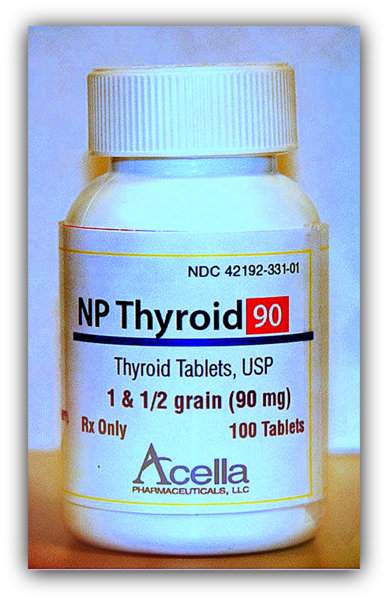
In 2011, I had a friendly and informative conversation with Philip Vogt, the President of Acella Pharmaceuticals, and Ellen Gettenberg, Director of Marketing. Acella is the company which brought out what is often termed a generic form of desiccated thyroid, but appears to be simply another great brand name of NDT. It first caught the eye of thyroid patients in November, 2010. And I want to pass onto you what I learned:

Acella is different

Acella Pharmaceutical of Georgia, USA, is not like the gigantic pharmaceuticals we often hear about. Instead, they attempt to target the under-served markets, producing medications for particular niches of treatment, or those which are low-profile medications. They also seek to produce lower-priced competitive versions of certain medications while keeping the quality. Thyroid patients appreciate that, especially after seeing the 2015 horrible rise in price for Armour desiccated thyroid after Forest Labs was bought out by Activias–often triple the original price–besides the fact that patients began to report a return of symptoms.

How they make their version of desiccated thyroid

When it specifically comes to its desiccated thyroid, they go by older version “recipes” – using more dextrose (sugar) and less methylcellulose, which we love But in their case, the tablets are stated to contain NO cellulose. That is actually good. Their tablets are also not as hard-pressed as Armour seems to be now. That means patients who like doing their NDT sublingually can make the Acella version work.

The ingredients

Acella started out with a 65 mg tablet to represent a grain, but by 2011, became a 60 mg tablet for its “grain”. They also make a 30 mg tablet (1/2 grain) and a 90 mg tablet (1 1/2 grain). The desiccated thyroid is speculated to come from the same manufactured source as do other brands.

Says the website:

The tablets contain both tetraiodothyronine sodium (T4 levothyroxine) and triiodothyronine sodium (T3 liothyronine) providing 38 mcg levothyroxine (T4) and 9 mcg liothyronine (T3) per grain of thyroid (or per 60 mg of the labeled amount of thyroid). The inactive ingredients are calcium stearate, dextrose (agglomerated) and mineral oil.

Note that like all manufacturers, they use the “synthetic” names for T4 and T3, but desiccated thyroid is NOT synthetic.

Reports by patients

They love it. It’s rare to hear anything negative about it. (If you do have a bad reaction to even Acella’s NP Thyroid, here’s your reason: https://stopthethyroidmadness.com/ndt-doesnt-work-for-me). So we say “Keep up the good work, Acella!

JanieSignature SEIZE THE WISDOM

************************

HAVE YOU LIKED THE STOP THE THYROID MADNESS Facebook page? It gives you daily inspiration, information, and discussion on certain topics.

ABOUT THE RT3 ONLINE CALCULATOR on STTM: My brainy techs have added three more combinations to the calculator, so it is now ready-to-go to help you figure out your ratio: https://stopthethyroidmadness.com/rt3-ratio So far, the feedback is very positive and we have seemed to remove “most” kinks. REMEMBER: you need to put your Free T3/total T3 in first, then all the measurements will appear for the RT3.

WHEN TESTING YOUR THYROID LEVELS: remember NOT to take your desiccated thyroid, or your T3-only, before labs, we learned the hard way. The T3 rises consistently after you take it, giving you false-high reading and freaking your clueless doctor out. **Picture doctor, eyes bugged out like a giant wasp, looking at lab result** With desiccated thyroid, the T3 will peak in approx. 2 hours, then a slow fall; with T3-only, it can take approximately 4 hours to peak. Recommend labwork found here.

NEED A GOOD PATIENT GROUP? Go here. Of course, the groups are free and can be very helpful. Or, you can choose a paid consultation with Janie, which seems to be extremely helpful for those who want more immediate feedback and help.

TYPICAL QUESTIONS AND ANSWERS about thyroid, treatment, more issues: www.stopthethyroidmadness.com/common-questions-answers

Recall of T3 tablets — 5 mcg. by Paddock Laboratories

Though this page was written in 2010, it has been updated to the present day and time. Enjoy!

***************
After the turn of the century and within groups associated with Stop the Thyroid Madness, thyroid patients made a huge discovery–that many of them had an RT3 problem!

RT3 is the acronym for Reverse T3. Reverse T3 production is normal. It will occur if you have surgery, after a bodily accident, when having the flu and/or other stressful conditions. It’s your body’s way of moving out the excess T4 by converting it to more and more RT3, which in turn, lowers your metabolism.

But when thyroid patients have either low iron or a cortisol problem, up goes the Reverse T3. And why is that a problem? RT3 is not only inactive, but you might say it’s a T3 “antagonist”, binding to the same cellular receptor that T3 would have attached to, but now can’t. Thus, T3 will rise higher and higher in the blood–a condition we call pooling.

So what did patients learn to do? Find out the reason and treat it…and in the meantime, they lowered the RT3 by lowering the amount of T4 they were getting, or by being on straight T3.

And in 2010 came recall of one of the brands of T3 by Paddock.

PRODUCT
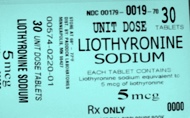
Liothyronine Sodium Tablets, USP 5 mcg, RX only, Net contents 100 tablets, NDC0574-0220-01, UPC code (01) 00305740220016. Recall # D-695-2010
CODE
Lot # 9C548
RECALLING FIRM/MANUFACTURER
Recalling Firm: Paddock Laboratories, Inc., Minneapolis, MN, by letter dated May 18, 2010.
Manufacturer: Metrics Inc., Greenville, NC. Firm initiated recall is ongoing.
REASON
The recall is being conducted due to a stability failure at the 12 month timepoint; the assay value of this lot was found to be sub-potent.
VOLUME OF PRODUCT IN COMMERCE
11,064 bottles
DISTRIBUTION
Nationwide including DC and PR

Luckily, as the years went by, there continued to be other brands of T3 and new brands.


  • Want to learn more about RT3 and the problems it can cause you?? You can read about it here on STTM’s Reverse T3 page, plus more details in the STTM book chapter on T3.
  • Have you Liked the STTM Facebook page? Great place of daily information and tips!
  • Like being informed?? Go directly to the STTM blog page and sign up for notifications at the bottom of any any page
  • Need other thyroid patients to talk to? Go to the Talk to Others page.
  • Have questions about what thyroid patients have learned? Check out the Question and Answers page.