Skip to content

Are you switching to Nature-throid? Here’s 10 good things to know!
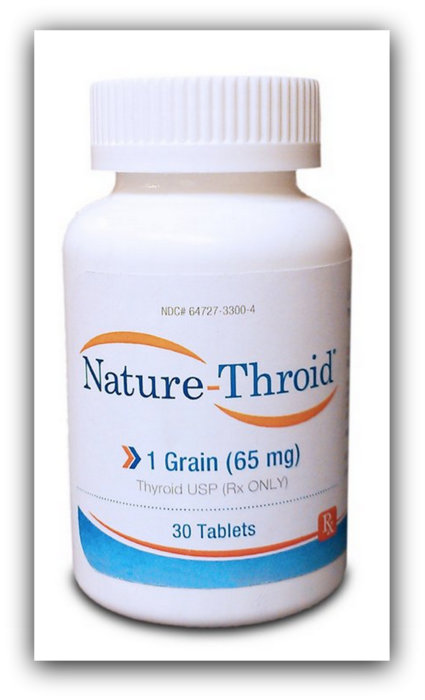
Screen Shot 2015-09-27 at 1.33.08 PM(This page has been updated to the current day and time. Enjoy!)

In 2009, there were many folks reporting problems with the newly-formulated Armour (and that has been true for 2015, sadly), just as there was a growing body of individuals stating they are switching to Naturethroid by RLC Labs (formerly Western Research), another prescription brand of desiccated thyroid which also makes WP Thyroid.

Today, there are even more quality brands to consider. And when a brand like Armour disappoints, many are also switching to NP Thyroid by Acella.

But if you are considering Naturethroid, here is info to carry with you if you switch:

  1. Naturethroid has a coating on the outside, and some patients state they bite on the pill to remove the coating, and still try to do it sublingually. No sugar, but some are determined.
  2. One grain of Naturethroid is 65 mg rather than the 60 mg that Armour users have been used to. Two grains are 130 mgs, etc. (One grain is actually 64.8 but it’s easier to round it up). Strengths are 1/4, 1/2, one grain, two grains, three grains.
  3. The makers of Naturethroid started making 1 1/2 grain tablets by 2010.
  4. Ingredients are
    • Porcine Thyroid Powder, U.S. Pharmacopeia
    • Microcrystalline Cellulose
    • Dicalcium Phosphate
    • Sodium Starch Glycolate
    • Magnesium Stearate
    • Hydroxypropyl Methylcellulose
    • Stearic Acid
    • Carnauba Wax
    • Polyethylene Glycol
  5. Naturethroid uses the same USP thyroid powder as any good desiccated thyroid product—it “adheres to full pharmaceutical purity and standardization on the consistency of the hormones along with full pre-and-post testing procedures associated with quality prescription products.”
  6. RLC Labs is a small and friendly pharmaceutical company.
  7. Twitter has a Nature Throid website.
  8. RLC labs also used to distribute Westhroid more than it does today (simlar), but that has largely been replaced by WP Thyroid–an NDT with very few fillers.
  9. When switching, you will have to figure out if you need to be on a similar amount as before, or a different amount, according to symptoms.
  10. And finally, it’s been around since the 1930’s–another tried and true desiccated thyroid product!

** Need the best groups on the internet to talk about your thyroid–totally based on wise patient experiences and wisdom?? Go here.

** Have you joined (liked) the STTM Facebook group? You’ll get solid and daily tips, information and inspiration from the Flagship of patient experiences and wisdom.

** Want to be informed of my blog posts? Curious what’s on my mind? Sign up for Notifications at the bottom of this page.


UK’s Royal College of Physicians continues to be deaf, blind and royally dumb.

throwingup1

Funny how things work. I had been wondering what the heck was going on with thyroid patients in the UK after the Royal College of Physicians (RCP) came out with their February 6th guideline stating that 1) thyroxine was the only medication needed for hypothyroidism, 2) “natural” medications were dangerous and 3) the only labs needed are the TSH and T4.

All the above goes totally against the life-changing experience of a growing body of patients.

Equally a part of this B-grade horror movie is the stand taken by the British Thyroid Association (BTA). Read it. And UK-TPA thyroid patient advocate Sheila Turner began to go through her own hell when her Armour was taken away, which you can read about in the February 20th blog post here.

And suddenly, I get an email from Sheila, informing me that the RCP stand is as bad as it was three months ago for her and other thyroid patients.

Sheila states: This is absolutely unbelievable that out of the hundreds of references we sent to the Royal College of Physicians to show their guideline to be flawed, they have taken no account of one single one of them. They are publishing their previous guidance without one since change. The world has gone mad.

Dear Sheila, Further to my email of 6 April, the comments and materials received by the College have been reviewed. This position statement or guidance (not a guideline) was produced on behalf of the Royal College of Physicians, in particular its Patient and Carer Network and the Joint Specialty Committee for Endocrinology and Diabetes; the Association for Clinical Biochemistry; the Society for Endocrinology; the British Thyroid Association; the British Thyroid Foundation Patient Support Group and the British Society of Paediatric Endocrinology and Diabetes and is endorsed by The Royal College of General Practitioners. The President has asked me to let you know that this review has not resulted in any changes to that statement. It should be noted that it is about the treatment of primary hypothyroidism and does not preclude other treatments for exceptional cases by specialist endocrinologists who can make clear to patients any associated risks. References supporting the statement are listed below. Yours sincerely, Catharine Perry Administrator – Diagnosis and treatment of primary hypothyroidism. BMJ 2009;338:b725 – Vaidya B, Pearce S. A Clinical Review of the management of hypothyroidism in adults. BMJ 2008;337:a801. This contains references for 35 articles and states that Armour thyroid is of no proved additional benefit to levothyroxine. – The Lancet Volume 363, Issue 9411, Pages 793 – 803, 6 March 2004. This covers the history, epidemiology, pathophysiology, and clinical diagnosis and management of hypothyroidism and is written by Caroline GP Roberts and Paul Ladenson of Johns Hopkins University School of Medicine, Baltimore, USA. This review, which references 164 clinical articles, states that the treatment of choice for hypothyroidism is levothyroxine sodium (thyroxine) and does not refer to Armour thyroid. – Baloch Z, Carayon P, Conte-Devolx B, et al. Laboratory medicine practice guidelines. Laboratory support for the diagnosis and monitoring of thyroid disease.Thyroid 2003;13:3-126. – Association of Clinical Biochemists BTA, British Thyroid Foundation. UK Guidelines for the use of thyroid function tests. http://acb.org.uk/docs/tftguidelinefinal.pdf – Surks MI. Ortiz E, Daniels GH, et al. Subclinical thyroid disease: scientific review and guidelines for diagnosis and management. 2004;291:228-238.

And as your peruse the six references above which they use to defend their tunnel-visioned, moronic position, you realize that you, your words, and your positive-outcome experience on desiccated thyroid, as well as the use of far better labs, is about as important within the UK’s latest medical pronouncement as is dirt on the bottom of a rusted bucket in the middle of an empty field in nowhere. Yup.

Or as Harold Shipman stated about the RCP’s guidelines: What a brilliant wheeze.

******************************************

See below on the potential importance of potassium in your health and well-being. And on the May 7th post about the party being over with Forest Pharmaceuticals, comments continue to come in about experiences with the “new” Armour.

Thyroid Tidbit: Desiccated thyroid in Denmark, Germany & Italy!

dancingpeopleSTTM’s Armour-vs-other-brands page now has information on desiccated thyroid in Denmark, Germany and Italy: www.stopthethyroidmadness.com/armour-vs-other-brands Thanks go to Julia Hendryx for alerting me about the brand in Denmark!
If I need to add more info or corrections, please use the Contact Me form at the bottom of any page on Stop the Thyroid Madness.

THIS PATIENT REVOLUTION for a better hypothyroid treatment is working! Desiccated thyroid brands which were almost extinct from low use are now seeing a comeback. Another comeback?? PATIENT HEALTH!! T4-only meds do NOT work, unless an elevator which only goes to the 5th floor of a 50 story building….works. My quote; my words.

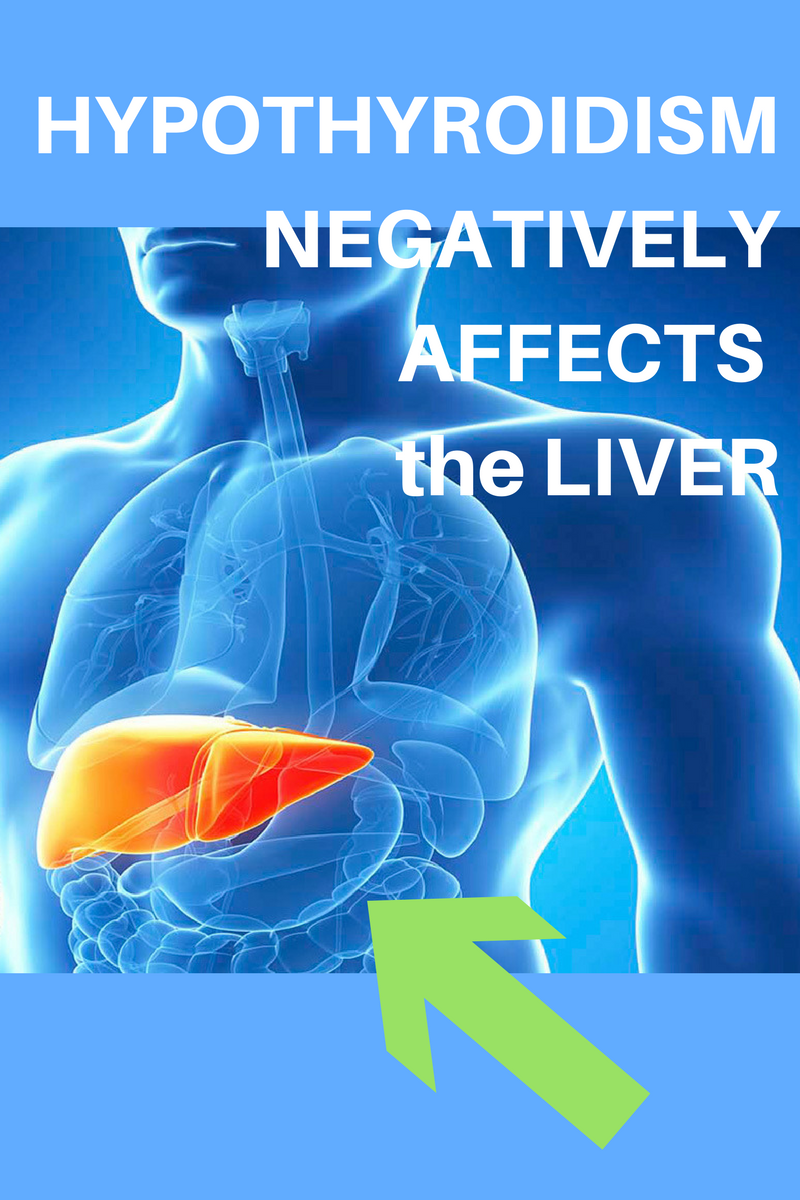
p.s. See the post below about the importance of your potassium levels, and below that, how being hypothyroid can affect your liver, and my opinion of that fact with T4 meds vs. desiccated thyroid, which one comment disagrees with. For the May 7th post, comments are still coming in about the “New” Armour. Express yours, and let’s hope that just raising it will do the trick, in spite of the loss of being able to do it sublingually as easy as before–a sad loss.

*Want to be informed of my blog posts? Curious what’s on my mind? Use the Notifications on the bottom left of the links.

I have a dream

As Susan Boyle of the UK had a dream which came true, I too wish from the deepest place in my heart that someday soon, SOMEONE from the mass media will FINALLY get smart and do a wide-reaching story for the hundreds of millions who are still on T4 meds like Sythroid, Levoxyl, Levothyroxine, Eltroxin, Oroxine…and who have depression or a myriad of other lingering symptoms of a sucky, laughable and shameful treatment. This video inspires me today just as it did a few weeks ago. Enjoy and dream with me. http://www.youtube.com/watch?v=bFzS0wgwyW4&annotation_id=annotation_179773&feature=iv 🙂

Janie

*Want to be informed of my blog posts? Curious what’s on my mind? Just use the Notification on the left at the bottom of the links.

*See below on how being on T4 meds can affect your liver. And below that–why I’m handing my promise ring back to Forest Pharmaceuticals.

Another reason to question taking T4 meds without T3—your liver

Though this page was originally written in 2009, it’s been updated to the current day and time. Time does not change that your liver “may” be negatively effected by being on nothing but T4-only meds, or even being underdosed on NDT or T3. This is not a diagnosis–just information.  ~Janie, thyroid patient and site creator

I’ve been noticing several articles coming out about a strong association between hypothyroidism and a twice the risk of liver disease and problems, especially in females.

And then it dawned on me: another strong reason patients end up up playing basketball with their trash cans using bottles of Synthroid, Levoxyl, Levothroxine or Eltroxin, and being replaced with a working desiccated thyroid or T4/T3, or T3.

In other words, continued hypothyroidism (which being on T4-only meds has promoted, say patients for years) and undiagnosed hypothyroidism (because of the inadequacy of the TSH lab test) can ‘potentially’ promote the development of nonalcoholic steatohepatitis, a more severe Fatty Liver disease, if these articles are right. The next progression is liver cancer, aka hepatocellular carcinoma (HCC).

Even worse, the study revealed that women who had been hypothyroid for more than 10 years had a threefold higher risk of liver cancer compared to women without a history of thyroid disorders. This will make you pause when you consider how many reports there are of patients having hypothyroid symptoms for YEARS with a normal TSH…and a clueless, TSH-worshipping doctor.

And if reading this bores you, understand that your liver is a HIGHLY important gland that you can’t live without. It plays a key role in detoxifying the toxins you ingest and breath in daily (including smoking), besides being a major fat burner. Make the liver diseased, and you become a breeding ground for toxins, the rise of other diseases…then death.

The solution? Patients are running from TSH and T4-only doctors, finding a doctor to put them on a working desiccated thyroid, or T4/T3, or T3, and avoiding the most common mistakes of dosing.

P.S. The original report came out in the May journal issue of Hepatology (the latter is now non-working–here’s the correct place it was to go.) (published by John Wiley & Sons on behalf of the American Association for the Study of Liver Diseases). Similar results were also reported in the Journal of Gastroenterology and Hepatology 2005.

Want to be informed about my blog posts? Curious what I’m ranting about? Just use the Notifications at the bottom right of any page to sign up.