Skip to content

Why do some patients escape adrenal dysfunction?? I think I know why I did.
Anyone who has read my story of nearly 20 years of absolute misery on T4-only meds would think I’d be right in the thick of adrenal fatigue / HPA dysfunction and low cortisol. Those were horrible, miserable, stressful, debilitating years.

Yet, I escaped it.

For awhile after I entered the thyroid patient activist field, I felt guilty. That was especially true as I saw how terribly people suffer with low cortisol. But I also realized there was something potentially amazing to be discovered as to WHY I escaped it.

But years went by, and I have always been extremely busy as an activist: daily emails to take care of; constant updates to the website, keeping track of Yahoo and Facebook groups; thinking about and writing the blog; activities around the book, phone consultations, and so much more. I have also fought to have an important private life.

So, it wasn’t until recently that I readdressed this question: why did I escape adrenal dysfunction? Was it genes which gave me strong adrenals?? That thought has drifted through my mind many times. But I wasn’t sure. So recently, I took some time to really search my past to find answers. And something else really stood out.

Namely, because I had always been a fitness and health buff, I was big into supplements. Sure, I was unable to do hardly anything about fitness part of the equation–my T4-induced and crippling dysautonomia killed that. But my belief in supplements never ended. That was impressed into me by my mother who always stressed taking a vitamin pill as a child. I also remember her putting my cigarette-smoking Dad on Vitamin C in the 1970’s, having read it might delay his inevitable lung cancer. (It was too late.)

So when I became a young adult, married with little children, I learned even more about supplements, and took them. And one thing I remember always taking all those years as a young adult was high amounts of Vitamin C. High amounts of Vitamin C!! That stood out to me. And below are facts about Vitamin C and adrenals:

VITAMIN C and ADRENALS:

  1. “Of all the vitamins and minerals involved in adrenal metabolism, vitamin-C is probably the most important. It is essential to the adrenal hormone cascade and manufacture of adrenal steroid hormones. It acts as an antioxidant within the adrenal cortex.” ~ www.bluemountainrx.com/adrenal.htm
  2. “While the adrenal glands need numerous nutrients to function normally, perhaps the most important of them all is vitamin C. The highest concentrations of vitamin C reside in the eyes, brain and adrenal glands. ~ http://www.adrenalfatiguefocus.org/adrenal-fatigue-and-vitamin-c.html
  3. “Healthy adrenal function requires vitamin C, and some of the highest concentrations of vitamin C in the whole body are found in the adrenal glands.” ~ http://www.naturalnews.com/029842_vitamin_C_adrenals.html
  4. “Vitamin C is utilized by the adrenal glands in the production of all of the adrenal hormones, most notably cortisol. When you are faced with a stressful situation, your vitamin C is rapidly used up in the production of cortisol and related stress-response hormones.” ~ http://www.adrenalfatiguerecovery.com/vitamin-c.html
  5. “The adrenal gland is among the organs with the highest concentration of vitamin C in the body. Interestingly, both the adrenal cortex and the medulla accumulate such high levels of ascorbate. Ascorbic acid is a cofactor required both in catecholamine biosynthesis and in adrenal steroidogenesis.” ~ http://www.ncbi.nlm.nih.gov/pubmed/15666839

There is much more on the net than the above, as well. And in fact, the important relationship between Vitamin C and your adrenals was proposed in 1951. This was huge, to me, as to why I may have escaped adrenal dysfunction. Even the use of B-vitamins and magnesium are important, tho I don’t remember what I was taking of those.

ANOTHER CLUE: I had a conversation with a gal recently. Like me, she suffered a long time, yet did not fall into adrenal fatique. I asked her why she felt she escaped it. She explained that she had worked for a naturopath for many years, and thus, took many supplements, including high dose Vitamin C. I was dumbfounded.

MY CONCLUSION: Whether I have found the irrefutable reason as to why I didn’t fall into adrenal fatigue and low cortisol may not be answered inconclusively. And who knows if some of us just have genetically strong adrenals. But I lean to believe that my early use of high-dose Vitamin C all those miserable years may have been a huge factor, along with B-vitamins which can also be depleted. Today, I take a minimum of 2350 mg daily via my buffered C powder, and in water, and usually double that amount, as I like taking it before bedtime for the magnesium. I am also a fanatic about adding squeezed lemon to my water or occasional fluoride-laden iced tea.

WHAT THIS MEANS FOR YOU: Adrenal patient experience has shown that once your adrenals or HPA function drops, as does your cortisol, the use of hydrocortisone is usually the best way to treat it. See the adrenals page here. And patients have learned in leaps and bounds on how to use HC with their open-minded doctors (…if they can even find a doctor who looks beyond his dogmatic training. It’s not easy.) But the use of high dose Vitamin C might not be something you want to ignore, whether you have to use HC or not:

  1. “Sufferers of adrenal fatigue are hit particularly hard by vitamin C deficiency. The production of cortisol and other adrenal hormones, characteristically low in this disorder, is dependent on an ongoing supply of vitamin C. If this supply dwindles, so too does the secretion of adrenal hormones. This feeble response from the adrenal glands places the body under further stress, further increasing demand for the vitamin C. The importance of intervention with the appropriate amounts of this nutrient should not be overlooked.” ~ http://www.adrenalfatiguefocus.org/adrenal-fatigue-and-vitamin-c.html
  2. Have you heard of Scurvy? This is a progressive disease from the deficiency of vitamin C that ultimately leads to death. And Linus Pauling wrote in his 1979 book, Biomolecular Sciences, that death from Scurvy is actually “adrenalcortical failure”. That is profound as to the importance of Vitamin C with YOUR adrenal health and/or recovery.
  3. “In two separate studies about vitamin C supplementation (1,000—1,500 mg per day for one week), ultramarathon runners showed a 30 percent lower cortisol level in their blood when compared to runners receiving a placebo. In another study of healthy children undergoing treatment with synthetic corticosteroids, 1 gram (1,000 mg) of vitamin C, consumed three times a day for five days, resulted in significantly lower cortisol levels compared to healthy children given a placebo. In a study of lung-cancer patients, a dose of 2 grams of vitamin C, given daily for one week prior to surgery, was able to bring elevated cortisol levels (resulting from the surgery) back to normal ranges in a significantly shorter period of time compared to patients receiving a placebo. ~ http://cortisolconnection.com/ch8_3.php

What about you? If you escaped adrenal dysfunction while going through years of misery on T4-only meds, or being held hostage to the lousy TSH lab result, why do YOU think you escaped it?

************************

* IODINE: Finally, I have updated the iodine page on STTM–long overdue. Thanks to VRP for pointing out that their links have changed. You can read many different links about iodine, the controversies and more, and decide for yourself what is right for you.

* FINDING A BETTER DOCTOR: Want to try to find a better doc that the vast majority of cows…oops, doctors? Go here.

* TALK TO OTHERS: Talking to other patients is what started me on new path years ago. You can too, here. Scroll down to view them all.
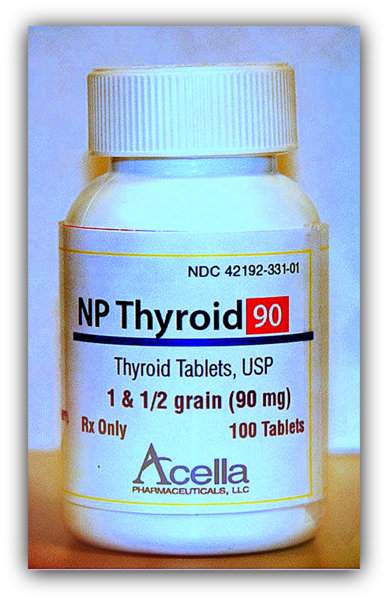

 

More on Acella desiccated thyroid….plus RT3 ratio calculator fine tuned!


Screen Shot 2015-11-09 at 12.21.12 PM(This post has been updated to the present day and time. Enjoy!)

In 2011, I had a friendly and informative conversation with Philip Vogt, the President of Acella Pharmaceuticals, and Ellen Gettenberg, Director of Marketing. Acella is the company which brought out what is often termed a generic form of desiccated thyroid, but appears to be simply another great brand name of NDT. It first caught the eye of thyroid patients in November, 2010. And I want to pass onto you what I learned:

Acella is different

Acella Pharmaceutical of Georgia, USA, is not like the gigantic pharmaceuticals we often hear about. Instead, they attempt to target the under-served markets, producing medications for particular niches of treatment, or those which are low-profile medications. They also seek to produce lower-priced competitive versions of certain medications while keeping the quality. Thyroid patients appreciate that, especially after seeing the 2015 horrible rise in price for Armour desiccated thyroid after Forest Labs was bought out by Activias–often triple the original price–besides the fact that patients began to report a return of symptoms.

How they make their version of desiccated thyroid

When it specifically comes to its desiccated thyroid, they go by older version “recipes” – using more dextrose (sugar) and less methylcellulose, which we love But in their case, the tablets are stated to contain NO cellulose. That is actually good. Their tablets are also not as hard-pressed as Armour seems to be now. That means patients who like doing their NDT sublingually can make the Acella version work.

The ingredients

Acella started out with a 65 mg tablet to represent a grain, but by 2011, became a 60 mg tablet for its “grain”. They also make a 30 mg tablet (1/2 grain) and a 90 mg tablet (1 1/2 grain). The desiccated thyroid is speculated to come from the same manufactured source as do other brands.

Says the website:

The tablets contain both tetraiodothyronine sodium (T4 levothyroxine) and triiodothyronine sodium (T3 liothyronine) providing 38 mcg levothyroxine (T4) and 9 mcg liothyronine (T3) per grain of thyroid (or per 60 mg of the labeled amount of thyroid). The inactive ingredients are calcium stearate, dextrose (agglomerated) and mineral oil.

Note that like all manufacturers, they use the “synthetic” names for T4 and T3, but desiccated thyroid is NOT synthetic.

Reports by patients

They love it. It’s rare to hear anything negative about it. (If you do have a bad reaction to even Acella’s NP Thyroid, here’s your reason: https://stopthethyroidmadness.com/ndt-doesnt-work-for-me). So we say “Keep up the good work, Acella!

JanieSignature SEIZE THE WISDOM

************************

HAVE YOU LIKED THE STOP THE THYROID MADNESS Facebook page? It gives you daily inspiration, information, and discussion on certain topics.

ABOUT THE RT3 ONLINE CALCULATOR on STTM: My brainy techs have added three more combinations to the calculator, so it is now ready-to-go to help you figure out your ratio: https://stopthethyroidmadness.com/rt3-ratio So far, the feedback is very positive and we have seemed to remove “most” kinks. REMEMBER: you need to put your Free T3/total T3 in first, then all the measurements will appear for the RT3.

WHEN TESTING YOUR THYROID LEVELS: remember NOT to take your desiccated thyroid, or your T3-only, before labs, we learned the hard way. The T3 rises consistently after you take it, giving you false-high reading and freaking your clueless doctor out. **Picture doctor, eyes bugged out like a giant wasp, looking at lab result** With desiccated thyroid, the T3 will peak in approx. 2 hours, then a slow fall; with T3-only, it can take approximately 4 hours to peak. Recommend labwork found here.

NEED A GOOD PATIENT GROUP? Go here. Of course, the groups are free and can be very helpful. Or, you can choose a paid consultation with Janie, which seems to be extremely helpful for those who want more immediate feedback and help.

TYPICAL QUESTIONS AND ANSWERS about thyroid, treatment, more issues: www.stopthethyroidmadness.com/common-questions-answers

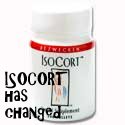
Isocort has been changed, plus a new STTM on-line RT3 ratio calculator

This post was originally written in 2011…but Isocort stopped being made afterwards. Today, what replaces it is Thorne’s Adrenal Cortex (NOT Cortrex, but Cortex). Amazon always carries it.

If you haven’t heard the latest, Isocort, an over-the-counter adrenal support product that has been favored by adrenally-challenged patients with minor to moderate adrenal problems, as well as favored by their forward-thinking doctors, has been reformulated.

Now for thyroid patients who loved Armour, “reformulated” is a nasty word. Armour lowered its sucrose, raised its cellulose, and most patients who had been on it successfully for years reported a return of symptoms. The partial solution has been to chew it up before swallowing.

But with IsoCort, the change “may” still be workable. All the following is right on the Isocort page on STTM. As we get more information on it, I’ll be adding to it:

IsoCort has changed! As of early 2011, Bezwecken changed the product from a bovine adrenal cortex to a fermented plant-derived cortisol, joining over 100 other chemical substances which are plant derived.

Why has Isocort always been popular with thyroid/adrenal patients? For years, patients favored Isocort because unlike so many other adrenal support products on the over-the-counter market, it was made solely from the adrenal cortex, i.e from New Zealand sheep. That is an important distinction since the cortex only contains cortisol as compared to whole adrenal glandular products which contain both cortisol and adrenaline (epinephrine). And giving yourself more adrenaline was the last thing you would want as an adrenally-challenged, low cortisol individual. Dysfunctional adrenals already cause the production of too much adrenaline as it is, resulting in anxiety, an increased heartrate and further stress on your already-stressed adrenals.

Will this change to plant derived affect the way Isocort works in me? Hopefully not. As before, it only contains cortisol and avoids the unneeded adrenaline that you get from adrenal glandulars.

What’s in the newly-reformulated IsoCort? Besides the cortisol, Isocort still contains Echinacea, as Echinacea Purpurea (6 mg per pellet). It also contains Lactose, Magnesium Stearate, Starch Arrowroot, Maltodextrin, Microcrystalline Cellulose, Magnesium Silicate, and Lactase.

Previously, it was listed as follows: Freeze-Dried Adrenal Cortex (soluble fractionation) from New Zealand Sheep. Echinacea Extract (trace amount). Prunus and Lomatium dissectum root isolate (kreb concentrate-2%) in pellet base of lactose and lactase.

In other words, it still contains lactose and lactase, but the rest you see are new.

Why did they change the bovine adrenal cortex to plant derived cortisol? For one, the change now makes the product vegetarian-friendly. And it now joins a group of over 100 plant-derived substances made out there which are effective.

Can you tell me more about it being plant derived? Medicinal plants have always contained substances that are helpful for humans. Aspirin is one good example, made from willow or other salicylate-rich plants. In fact, there are so many medicinal plants out there that we haven’t even begun to touch the surface of using them! China is an exception, having used plants for thousands of years. It’s said that the practice of ayurvedic in Asia uses nearly 2000 different kinds of plant species. The Botanical Garden of the National Autonomous University of Mexico has stated there are approximately 3,500 species of medicinal plants in Mexico alone. And more and more cancer drugs are going to be plant-derived.

How do patients use IsoCort? When after doing a 24 hour saliva cortisol test, it’s discovered there are some low cortisol readings, the use of Isocort gives back the cortisol that the sluggish adrenal/HPA function is not giving. You can read more about dysfunctional adrenal function here. After reading that page, you’ll see a link on what patients have learned in treating it, plus references to other websites and patient groups.

Are there any other OTC adrenal cortex products out there? Yes. If you will use your favorite search engine and put in adrenal cortex supplements, you’ll find other sources. Just read the labels correctly to make sure it’s only adrenal cortex.

* To read four facts about plant-derived medications, go here.
* To read why you may need cortisol, go here.
* For good patient groups, go here.

**********************************

FREE T3/REVERSE T3 ON-LINE CALCULATOR ADDED TO STTM

Not doing well as you raise your desiccated thyroid as compared to others? Have dysfunctional adrenals or low ferritin/low iron?? You may be making far too much Reverse T3 (RT3), which clogs cell receptors and prevents regular T3 from getting to your cells. And the best way to find out is to understand the RATIO BETWEEN YOUR FREE T3 and REVERSE T3.

But figuring out that ratio may be daunting for some who hate math. So to counter that problem, STTM now has a page where you can plug in your two lab results and the measurements and get your ratio number: https://stopthethyroidmadness.com/rt3-ratio Please note that there are currently three combinations that are not in there, but are being worked on as I write this by STTM’s brainy techs. Hopefully by next week, you’ll see all of the possible combinations!

To read more about Reverse T3, go here.

“Are Endocrinologists just DETERMINED to be stupid?” ask some thyroid patients.

(Though this was originally written in 2011, it has been updated to the present day and time. Enjoy!)

**********

Will it ever end?

A very troubling article

On March 21st, 2011, from the Endocrine Today website, comes the article Hypothyroidism only partially responsible for decreased quality of life in Hashimoto’s thyroiditis. And this article has so many troubling comments and wording that it has made some thyroid patients question whether their Endocrinologist can really help then.

For example, the article notes that there seems to be a “higher symptom load and the lower quality-of-life scores in the group of patients with increased anti-TPO levels”, which can include “Chronic fatigue, dry hair, dysphagia, irritability and nervousness”.

Yet, the article states, these patients have

    • “normal thyroid function”
    • are “euthyroid”
    • have an “ideal biochemical response to thyroid hormone replacement therapy.”.

Are you kidding me, say many thyroid patients??? Euthyroid technically means “the state of having normal thyroid gland function.” Yet, chronic fatigue, dry hair, dysphagia (difficulty swallowing), irritability and nervousness are far from normal, besides being classic hypothyroid or Hashimotos symptoms, as well as having potential adrenal issues from having poorly treated hypothyroidism!

And of course, most informed thyroid patients know that ” euthyroid” and “normal” and “ideal” in the mind of poorly-trained doctors refer to an ink spot on a piece of paper called the TSH lab result and NOT cellular receipt and/or use of thyroid hormones. The TSH is a pituitary hormone, not a thyroid hormone. The TSH lab test has failed patients for decades, just as has T4-only like Synthroid, levothyroxine, Eltroxine, etc!

Also mentioned is a particular Austrian study involving 426 women aged 19 years or older who were undergoing surgery for benign thyroid disease. When patients come on thyroid groups and report Endocrinologists who want to remove their thyroids simply because they have the treatable Hashimotos disease, you have to wonder why 426 women were having surgery for “benign thyroid disease”…

But in spite of all the above, there is hope!

Hashimoto’s patients have become wise and informed. To read all the ways patients have learned to adequately treat Hashimotos, go here.

To find out if you now have an adrenal problem, go here. This is important to know because it can be problematic in raising NDT if you have low cortisol, or high cortisol. Thus, the need to treat it first.

To find a good doctor to work with, and/or teach while you are working with, go here.

******************************

Do you look back and wonder about the fact that your thyroid was taken out? Let us hear your story by commenting on this post. What has been your experience with an Endocrinologist? Tell us about it.

*******************************

** Have you Liked the STTM Facebook page? It provides daily information and inspiration just for thyroid patients!

** Check out recommended patients groups on the internet.

** Stop the Thyroid Madness is available in TWO different books! https://stopthethyroidmadness.com/comparing-the-sttm-books/

How does your insurance deal with desiccated thyroid?

(Though this post was first written in 2011, it has been updated to the present day and time. Enjoy!)

Wendy is one of those gals that tries to adhere to “natural” in regards to her medication choices. She switched over to Natural Desiccated Thyroid (NDT) from Synthroid about three months ago.

The transition was slightly trying, says Wendy. Her doctor didn’t believe her that she shouldn’t be on a low starting dose for more than a couple weeks without upping it. So she went hypothyroid all over again. It’s a common mistake that many doctors make with NDT.

But after successfully upping the dose every few weeks, she will now shout that it’s been the BEST thing in every way! She tells folks that being on Synthroid was like having your hand amputated and replaced with a hook, while being on desiccated thyroid was like having it replaced with a fully functional prosthetic. Her skin is softer, hair is not shedding, her mood has changed in a good way, memory has returned, fogginess has faded. She feels closer to her old self than she has in almost five years.

Now the bad news…

All this time, she only paid $15 for her desiccated thyroid at the local Walgreen’s. But as of April 1st, 2011, it became what is called a Tier 3 drug under her insurance plan–United Healthcare. Exclaims Wendy in outrage and sadness: “This means that the natural drug I love, that has restored my in so many ways that the synthetic t4-only drugs never could, will now cost 85 bucks! Who can afford that?!

And here’s the awful irony when it comes to her insurance plan: Synthroid, the worst medication ever thrust upon us in the treatment of hypothyroid, is Tier 2 (i.e. costs less), and generic T4-only is Tier 1 (costs even less). i.e. if you are under this insurance, you have to pay big bucks to feel a thousand times better. She has no clue why this is happening, but warns that it might start to happen across the board for others as well!

In the United States, most Tiers look like this (and some companies have three tiers, while others have five):

Tier 1 is for generic medications and has the lowest co-pay

Tier 2 is for “preferred” brand name medications, i.e based on “safety, efficacy and cost”, and is the second lowest co-payment. (I put the word preferred in quotes because it’s not based on what changes YOUR life as a thyroid patient.)

Tier 3 is for non-preferred brand name medications or preferred specialty drugs. It’s termed as those drugs which are not typically used as first line of treatment, and have a higher co-pay.

Tier 4 is for specialty medications, i.e those which require special dosing or administration. Highest co-payment.

In the United Kingdom, where the National Health Service (NHS) provides publicly funded health care, there are formularies which specify which medications are available…or not, and one can get Prescription prepayment certificates (PPC) .

In Australia, “Medicare — via the Pharmaceutical Benefits Scheme (PBS) — subsidises the cost of around 1,700 ‘necessary and life-saving’ medicines. In fact, most medicines available on prescription are subsidised under the PBS, so just by having a prescription filled you receive the benefit of the subsidy. https://www.justlanded.com/english/Australia/Australia-Guide/Health/Medicines-Chemists

Does your health insurance cover your desiccated thyroid?

JanieSignature SEIZE THE WISDOM


How medical journals affect the prescription practice of your doctor: An interesting article on this found here. And here’s an article about how the author of a medical article fails to state his association with the pharmaceutical of the product he is writing about–one more conflict of interest and influence on your doctor!

Ridiculous! Basing “normal” for Hashimoto’s patients by the TSH, a pituitary hormone, NOT a thyroid hormone: Read it here and weep.

Vit. D can help you stay sharp: So many benefits from optimizing your Vit D, and here’s one with your brain.

Need to talk to others? See all your alternatives here.