Skip to content

The Scandal: Thyroid Patients are Speaking Out, Wall Street Journal, and a new video!

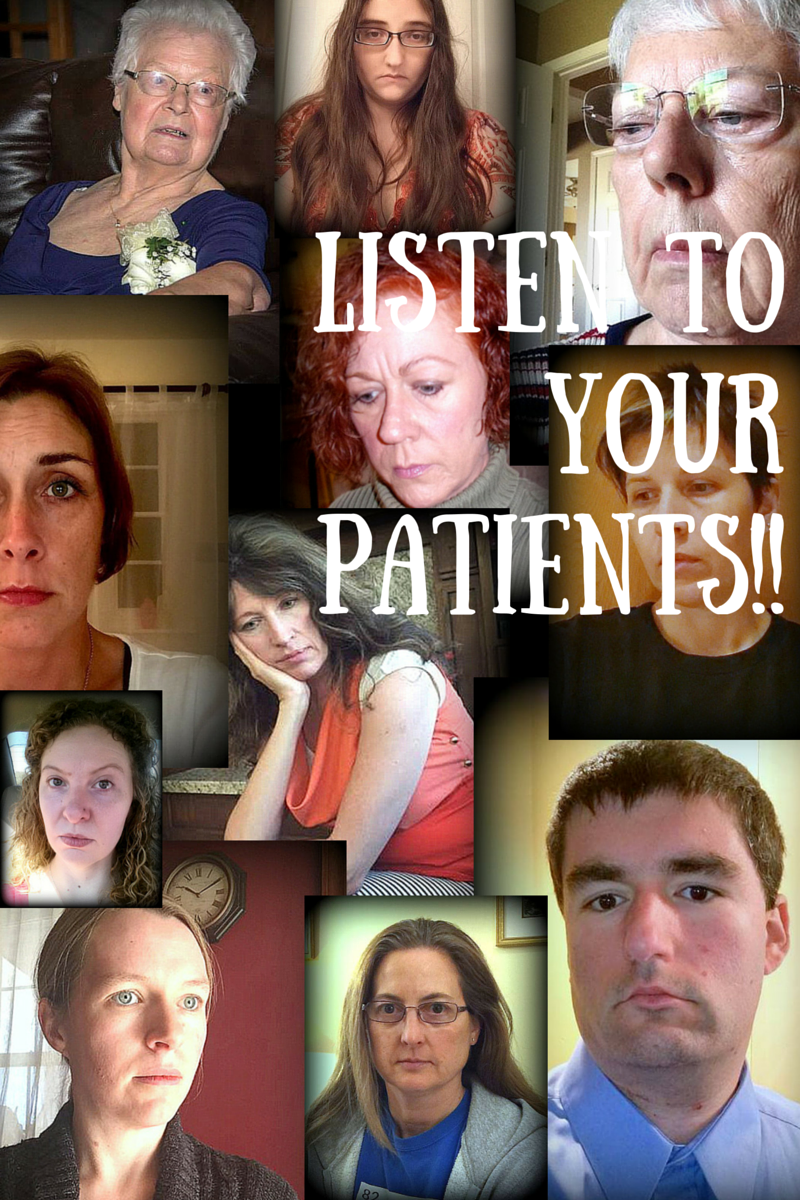
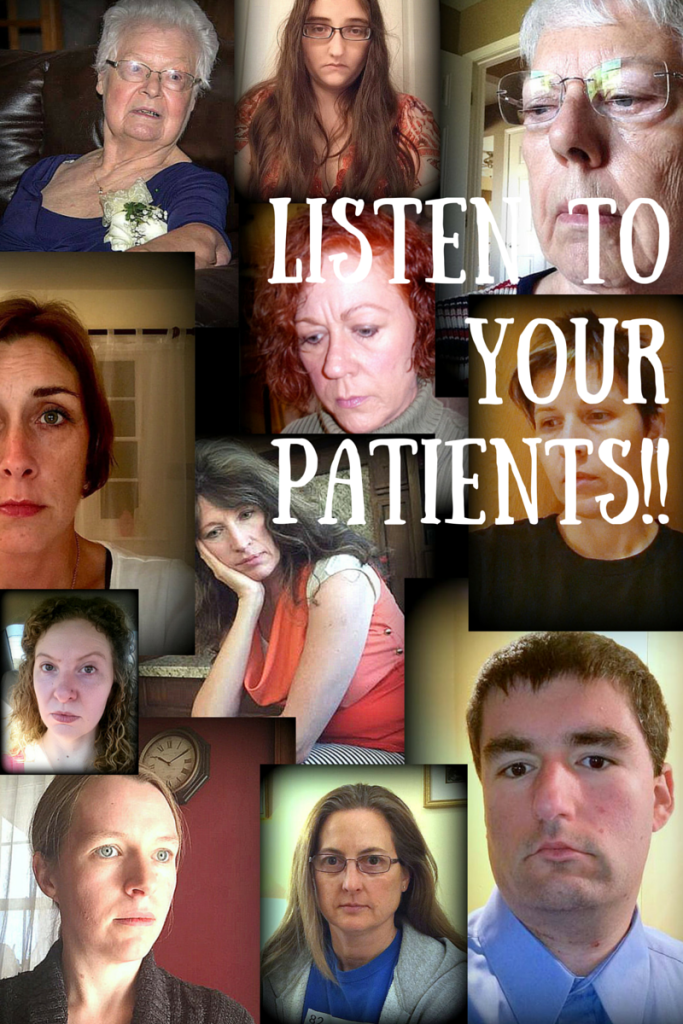
STTM photos of people from video UPDATEDThe push continues, fellow thyroid patients. And it’s getting louder and more widespread.

This week, Wall Street Journal columnist Melinda Beck, who writes a weekly health column, hit an important gong with her wonderful attention-getting article titled “Doctors Hear Patients’ Calls for New Approaches to Hypothyroidism.”

“Doctors and patients have been at each other’s throats for decades over how to treat a little gland in the neck–and patients may be gaining ground.” ~Melinda Beck

Beck underscored the sad reality that doctors have been relying “on a single form of treatment for hypothyroidism”, aka T4-only like Levothyroxine or Synthroid. And it’s been travesty.

Why T4-only as a sole treatment is a scandal

As I explained in detail in the revised Stop the Thyroid Madness (STTM) book, a healthy thyroid produces five hormones: T4, T3, T2, T1 and calcitonin, with T4 being the storage hormone, and T3 being the powerhouse of all the thyroid hormones. In that healthy thyroid, T4 will convert to T3, but the gland also produces “direct” T3. That is an important distinction.

Yet this “single form of treatment” with simply a storage hormone, which was thrust upon thyroid patients by 1960 (see Chapter 1 in the revised STTM book for excellent historical details), has forced us all to live for conversion alone…and hundreds of millions of us over the past five decades have a paid a hefty price. There are simply too many reasons why the conversion of T4 to T3 can be impaired, ranging from genetic factors, to diet, to stress, to illness, to age.

That is exactly what compelled me, in 2002, to start what is now the largest active thyroid group still on Yahoo, and later, the largest “system of thyroid groups” on Facebook, called the FTPO (For Thyroid Patients Only) groups–the only system of patient groups endorsed by Stop the Thyroid Madness.

How patients are dismissed

In addition to quoting a few doctors, Beck interviewed thyroid patient/advocate Mary Shomon, who stated “It’s so much easier to tell a woman to get up off the couch or hand her a prescription for antidepressants.” Also interviewed was thyroid patient/advocate Dana Trentini, who feels her second pregnancy ended in miscarriage due to only being dosed by the TSH, which in her case was left high–another hefty problem in the treatment of thyroid patients.

Major kudos to Antonio Bianco, president of the American Thyroid Association

When the American Thyroid Association (ATA) has been the height of disappointment for informed thyroid patients with it’s strong emphasis on “synthetic thyroxine” as well as its poor details about NDT, it was extremely refreshing to see him quoted as stating: “I credit this to patients pushing doctors and saying, ‘You don’t know what you’re talking about. I don’t feel fine’.” followed by Beck’s words that Bianco ‘has refocused the research to search for answers for such patients’. You give us a light of hope, Dr. Bianco.

Seven areas that patients beseech their practitioners to be wiser about…

1. Levothyroxine, Synthroid and all other T4-only medications

They have failed far too many of us. It’s not about exercising more, eating less, seeing a therapist or putting us on a myriad of other medications to treat conditions which are actually the results of that failure. Learn from us.

2. Natural Desiccated Thyroid (NDT)

What has been vividly changing lives is Natural Desiccated Thyroid (NDT), not T4-only medications. NDT has been around since the 1890’s–it worked then and it works now. Learn from us.

And to the contrary, NDT’s T4 to T3 ratio of 80/20 (as compared to the human ratio of 93/7) has not been a problem for the vast majority. Instead, problems are usually “revealed” on NDT due to a cortisol issue and/or low iron–both common problems that arise with patients who have been put on T4-only, or who have been left undiagnosed.

3. The TSH lab test

The TSH lab test is and has been as much a failure for thyroid patients as has T4-only. To be held hostage to a “pituitary hormone” has been a complete **nightmare** for thyroid patients. Even one of your own esteemed colleagues, Jeffrey Dach MD, as well as many others, know the travesty of the TSH as explained in chapter 4 of the practitioner-written book Stop the Thyroid Madness II. Learn from us.

4. Lab tests that count, and how to read them

It’s the free T3 and free T4 lab tests which have been superior for either diagnosis or dosing, not the TSH. And a key observation noted by informed thyroid patients is “where” a result falls in the so-called “normal” range that has meaning. Many key lab tests have helped us in our journey towards feeling wonderful again. Learn from us.

5. Symptoms that go along with hypothyroidism

To the contrary, there are clear symptoms that go along with the right lab tests to reveal hypothyroidism. Depression is overtly common in an undiagnosed or poorly treated hypothyroid state, as is afternoon fatigue, poor stamina, dry skin, hair loss, rising cholesterol, rising blood pressure, painful joints, and/or others. How do we know as informed patients? Because they go away when optimally treated on Natural Desiccated Thyroid. Learn from us.

6. T3 added to T4

Adding T3 to T4 has proven to also be far superior to T4-only, and to the contrary, it has NOT been “difficult to sustain therapeutic levels” if practitioners will simply learn from their patients how to use T3-only with T4. The same goes for the even more superior Natural Desiccated Thyroid. Learn from us.

7. Listening to your patients instead of dismissing them

Finally and most importantly, though we appreciate the intense medical training that all our doctors have received, it’s time to consider that we, as informed patients, might have something valuable for our doctors or practitioners to consider and open their minds to. It’s not just about clinical trials. It’s time to RESPECT AND LISTEN TO YOUR PATIENTS, THEIR EXPERIENCES, CLINICAL PRESENTATION, AND THEIR OWN INNATE WISDOM. Learn from us.

ANNOUNCING: A new powerful YouTube video in honor of thyroid patients worldwide: https://www.youtube.com/watch?v=2n0NfAUyOKo Please share this video to your blogs, private Facebook pages, groups, Twitter, email. Join the PUSH!

JanieSignature SEIZE THE WISDOM


– Head on over the Stop the Thyroid Madness Facebook page and Like it for daily inspiration and information!

Dr. Melnick discusses alarming article from Harvard about the use of the TSH and thyroid treatment!

(Note: if you are reading this via email notification, do NOT reply to the email if you want to comment. Click on the title of the blog post, which will take you directly to the blog post. Scroll down to comment there.)

******************************************
P4089852Dear STTM Blog readers, I am so fortunate to talk to many wonderful individuals because of Stop the Thyroid Madness. And recently, I had a conversion with the very insightful Dr. Hugh Melnick of New York City.

Dr. Melnick brought my attention to a very disturbing article titled “For borderline underactive thyroid, drug therapy isn’t always necessary” that came from the Harvard Health Letters in October 2013, You can see it here: http://www.health.harvard.edu/blog/for-borderline-underactive-thyroid-drug-therapy-isnt-always-necessary-201310096740.

This conversation between Dr. Melnick and I may be of great interest to STTM readers, besides alarming once you see what is being stated in this article and suggested as treatment guidelines. It’s simply Thyroid Treatment Dark Ages!

*****

JANIE: Hello Dr. Melnick. I’m so glad to chat with you! Can you tell our readers a little about yourself?

DR. MELNICK: I am a reproductive endocrinologist who has been in medical practice since 1976. As the medical director of Advanced Fertility Services In Vitro Fertilization Center in New York City, I have always been impressed by the large number of infertile women that I have seen over the years, who are symptomatically hypothyroid, and who conceive after treatment with thyroid medication.

Although I did my medical training at a point in time when the TSH test and Synthroid were just being introduced into clinical practice, I was trained by one of the most widely respected endocrinologists of that era, Herbert Kupperman, MD, Ph.D. to diagnose and treat patients with potential thyroid issues according to their symptoms, rather than solely by their blood test results. His vast clinical experience, and subsequently mine, as well, is that treatment with Natural Desiccated Thyroid (NDT) gives far superior symptomatic improvement for the vast majority of patients. Furthermore, the dosage of thyroid medication should always be based upon a patient’s clinical symptoms and not the TSH level.

JANIE: That greatly impresses me when I learn of doctors like yourself who understand the efficacy of Natural Desiccated Thyroid as well as the problems with using the TSH lab test. You recently brought my attention to what was written just a few months ago by Heidi Godman, the Executive Editor of Harvard Health Letter (see introduction above). Can you expound on what Ms Godman meant by “borderline underactive thyroid”?

DR. MELNICK: Actually, Ms. Godman is mistakenly defining hypothyroidism by TSH levels, rather than by a patient’s clinical symptoms. It is obvious that there are many symptomatic and genuinely hypothyroid individuals, who have normal TSH levels, and who experience relief when given a proper dose of the appropriate thyroid medication. The TSH level only diagnoses a type of hypothyroidism that is due to failure of the thyroid gland itself, or a failure of the pituitary gland.

In my experience, the most common form of hypothyroidism is called subclinical because the TSH levels are in the “normal range.” It is a genetic condition, usually passed through the mother and manifests itself later in adulthood. In subclinical hypothyroidism, the individual’s cells need more active thyroid hormone–T3–than their bodies are able to produce in order to function properly. Therefore, supplementation with a thyroid medication containing T3, in the proper dose, will relieve the troubling symptoms and allow the cells to function optimally.

Again, basing the dosage of thyroid medication on TSH levels is incorrect. When treating hypothyroidism, we are not treating a condition like diabetes, in which the insulin dose is based upon the patients’ blood sugar levels. Although they are both endocrine disorders, they are vastly different conditions and cannot be treated in the same fashion, although many endocrinologists still insist on doing so!

JANIE: In the article, Godman quotes that prescriptions for levothyroxine have increased from 50 million in 2006 to about 70 million in 2010, and a similar increase has occurred in England and Wales. She then calls this increase in treatment “pretty risky business”, citing irregular heart rhythms, insomnia, and loss of bone density”. What is she implying there?

DR. MELNICK: I think that the observed increase in the use of the thyroid medication Synthroid is due to the fact that hypothyroidism is a very common condition, affecting at least 35% of the female and 10% male population. Considering the population estimates for 2013 is 317 million people in the U.S.A. and the population of the United Kingdom is estimated to be 70 million, 28% of the population in the U.S. and 23% of the population in England, (assuming one prescription per year per individual patient) are being treated for hypothyroidism. This is actually a bit less than the estimated incidence of hypothyroidism in this country. I also believe that more cases of hypothyroidism are being found because people, in general, are more informed about the symptoms of hypothyroidism and seek treatment.

In my opinion, Ms. Godman erroneously categorizes treatment of hypothyroidism a “pretty risky risky business”. The risks of not treating hypothyroidism is, in fact, more potentially injurious to a patient’s health!

For example, the increased risk of heart disease in untreated hypothyroid individuals is a solid example of why hypothyroidism needs to be treated. The examples that she cites, namely, irregular heart rhythms and insomnia, are found in many people with hypothyroidism before treatment and are cured by adequate thyroid treatment. The symptoms that she mentioned are not exclusively associated with hyperthyroidism. The loss of bone density claim comes from studies of hyperthyroid individuals, who because of their hyperthyroidism and excessively high metabolic rate, may develop osteoporosis.

JANIE: The next part of this article is alarming. It refers to a particular “clinical practice guidelines” authored by Endocrinologist Dr. Jeffrey Garber, an associate professor of medicine at Harvard Medical School. These guidelines come from a task force representing the American Thyroid Association and the American Association of Clinical Endocrinologists. The first guideline is as follows, and goes completely against what informed thyroid patients know to be wise. Can you comment?

1) The best way to check for hypothyroidism is to look at the level of thyroid stimulating hormone (TSH) in the blood, and when the TSH level is above 10 mIU/L, there’s uniform agreement that treatment with levothyroxine is appropriate.

DR. MELNICK: Firstly, clinical practice guidelines are merely suggestions that have been developed to help physicians with limited experience diagnose and treat medical issues. Clinical guidelines are like a cook book, which describes a recipe that makes a simple meal, but not necessarily a complex and elaborate feast. That said, it is quite obvious that the way in which I diagnose and treat hypothyroidism is quite different than that which is suggested by the above referenced societies.

Although I do perform a complete battery of blood tests, including antithyroid antibodies, iron, vitamin B12 and vitamin D levels, I believe that a clinical approach – listening to a patient’s symptoms and treating a patient accordingly – is, in some ways, more important in diagnosing and properly treating patients suffering with the symptoms of hypothyroidism. If a physician only looks at a patient’s blood tests, without listening to the patient’s symptoms and asking them appropriate questions, many people who legitimately need thyroid medication will be denied proper treatment. That is precisely the reason that so many people come to me suffering with all the classical symptoms of hypothyroidism and tell me that their doctors have tested their thyroid and found them to be “within normal limits”.

It is not surprising when these very same patients experience symptomatic improvement when treated with adequate doses of NDT. I rarely treat patients initially with Synthroid. The primary reason is that Synthroid, being a synthetic T4 (a weak thyroid hormone- not chemically identical to human T4), must be converted into T3, the potent form of the hormone that enters every cell in the body and makes the cells of the body function normally. Unfortunately, many individuals are unable to successfully convert T4 into T3, so the patients’ symptoms remain, yet the TSH level is normal.

Natural desiccated thyroid (NDT) is made from the thyroid glands of pigs, which produce thyroid hormones chemically similar to that found in humans and does contain T3. Porcine (pig) thyroid gland also contains other thyroid hormones and proteins, which, in my experience are much more effective in relieving the symptoms of hypothyroidism than synthetic T4. Who can argue that a natural treatment, if availble, is to be preferred over a synthetic one.

JANIE: I loved the analogy above to a cook book, Dr. Melnick! Garber’s second most-emphasized guideline is the following, and I would love for you to comment on this as well, as informed thyroid patients would find this very disturbing, as well:

2) If the TSH level is between 4mIU/L and 10mIU/L, treatment may still be warranted in various situations:

  • if the levels of actual thyroid hormones in the blood–known as thyroxine (T4) and triiodothyronine (T3)–are abnormal
  • if the bloodstream contains anti-thyroid antibodies that attack the thyroid. These antibodies would indicate a hypothyroid condition called Hashimoto’s disease, in which the immune system mistakenly attacks the thyroid.
  • if there is evidence of heart disease or risk for it.

Garber is next quoted as saying “Use thyroid hormone for a brief period of time.” and “If you feel better, you can continue with treatment. If not, then stop.” That recommendation is quite alarming as well, as it fails to understand that it may not be about stopping thyroid medication, but moving over to a far better treatment with natural desiccated thyroid, which informed thyroid patients know should have been the first treatment of choice anyway. Can you comment?

DR. MELNICK: In my clinical experience, 99% of patients with TSH levels over 4.0 are quite symptomatic, if questioned about their symptoms properly. Therefore, treatment is absolutely mandatory, both to relieve “quality of life symptoms” as well as to prevent heart disease, lower blood pressure, normalize blood sugar and cholesterol levels, if they are found to be elevated.

Dr. Garber’s recommendations about using thyroid medicine for a short period of time and continuing it if improvement is noted omits two essential factors. The first is that since he treats his patients only with Synthroid, a significant percentage will show no improvement because their symptoms are not relieved because they cannot convert T4 into T3. The second factor is that by following TSH levels in the blood, a patient may not actually be taking a high enough dose of thyroid medication, yet will show low TSH levels in the blood. The level of thyroid hormones circulating in the blood-whether they are bound or free- only indicate absorption of the medication and give no indication as to the amount of T3 entering the cells. When an individual gets enough T3 into their cells, their symptoms will improve.

The only way to measure the correct dose of thyroid medication, in addition to noting improvement in symptoms, is by measuring the Basal Body Temperature and by the measurement of nerve conduction velocity (Thyroflex Test). This is a noninvasive test which gives a good indication of dosage adequacy. The slower the patient’s nerve conduction velocity, the higher the dose of thyroid medication that is required.

One main point that must be noted is that thyroid medicine may take up to twelve weeks in order to experience some degree of symptomatic relief. The other is that the patients’ dosage should be increased gradually and in divided daily doses until symptomatic relief is experienced. The dose should be reduced if the patient experiences rapid or irregular heartbeat, shakiness or anxiety. These symptoms will resolve in several hours and are not harmful.

Hashimoto’s or autoimmune thyroiditis is a much more complex clinical condition, in that symptoms in many individuals may vary, from hypo to hyper from time to time. Treatment with thyroid hormone is usually needed, but some patients, in the early stages of thyroid autoimmunity, may be fairly asymptomatic. As the condition progresses, symptoms will eventually be experienced. The levels of antithyroid antibodies do not correlate with the severity of a person’s symptoms. Antithyroid antibodies never disappear and will always be detectable in the blood. There may also be gluten sensitivity in some instances, so dietary factors may be important. When an infertility patient is found to have antithyroid antibodies, whether they are symptomatic or not, I always treat them with NDT since it does help them to conceive and seems to reduce the incidence of miscarriages.

JANIE: Heidi Godman then states the following about individualized treatment for hypothyroidism, which informed thyroid patients know by years of experience is a recipe for disaster: That requires measuring TSH four to eight weeks after starting treatment or changing a dose, another TSH test after six months, then every 12 months.”

DR. MELNICK: I respectfully disagree with both Ms. Godman’s formula as stated above, as well as with Dr. Garber’s method for diagnosing and treating hypothyroidism. Although the Harvard Medical School is a very prestigious institution, and that the information that they published cited the work of a physician of professorial rank, it is quite contrary to my own clinical experience and that of the many untreated or inadequately treated individuals who suffer with the many debilitating and disturbing symptoms arising from thyroid hormone deficiency.

I say this in jest, but if a patient follows the treatment protocol advocated by Ms. Godwon, they are more like to die of old age before their symptoms of hypothyroidism begin to show signs of clinical improvement .

JANIE: Your last sentence was excellent, Dr. Melnick. Your sage observations and wisdom jive with over a decade of successful patient experiences and wisdom! And we must push AGAINST the guidelines suggested by Dr. Jeffrey Garber. Informed thyroid patients know how disastrous they can be!

********************

**To sign up for email notifications of the STTM blog post, see bottom right of this page: https://stopthethyroidmadness.com

**To order your own labwork, go to the Recommended Labwork page.
 

Here we go again, thyroid friends: Endocrinologists wear their pointed DUNCE hats.

Duncecap

Ah me.

Ever heard of Clinical Thyroidology?

It’s a physician-targeted publication by the American Thyroid Association (ATA). The ATA states they are the “leading organization devoted to thyroid biology and to the prevention and treatment of thyroid disease through excellence in research, clinical care, education, and public health.”

And a Letter to the Editor in the December 2013 publication of Clinical Thyroidology only underscores why so many thyroid patients report that they…

  1. Avoid Endocrinologists like the plague for the treatment of their hypothyroidism.
  2. Can hardly contain their disgust about Endocrinologists they have seen!

The letter is based on the March 2013 study I have mentioned before, titled “Desiccated thyroid extract compared with levothyroxine in the treatment of hypothyroidism: a randomized, double-blind, crossover study.” It was done by the Department of Endocrinology at Walter Reed Military Medical Center and headed by Thanh D. Hoang, DO and associates.

The objective of the study was to investigate the effectiveness of DTE (acronym for Desiccated Thyroid Extract, which is more popularly termed Natural Desiccated Thyroid for thyroid patients) compared with L-Tâ‚„ (more popularly known as T4-only for thyroid patients).

At the conclusion of the 16-week study, they found that…

34 patients (48.6%) preferred DTE therapy, whereas 13 (18.6%) preferred levothyroxine; 23 (32.9%) did not specify a preference, he said. Further analysis confirmed those who preferred DTE lost even more weight over a 4-month period.” i.e. the patients who preferred it “lost 4 lb during the DTE treatment, and their subjective symptoms were significantly better while taking DTE as measured by the general health questionnaire-12 and thyroid symptom questionnaire (P < .001 for both).”

Yet the study concludes: “DTE therapy did not result in a significant improvement in quality of life”.

And why did the study conclude there was no significant quality of life improvement? Is it possible that this study was flawed in ways they don’t understand…

Two easy answers:

  1. Patients canNOT be held hostage to the TSH lab test (which the study did for those participants) if we want to find that “significant” quality of life improvement! When thyroid patients are at their very best with desiccated thyroid, they end up finding their TSH is below the so-called “normal” range, and without one iota of “hyper-like symptoms, i.e. no bone loss or heart issues”. (Hyper symptoms will only occur if there is an undiscovered or untreated cortisol or iron issue. See #4 below).
  2. We have to have optimal cortisol and iron levels with desiccated thyroid to achieve that “significant” quality of life improvement!

Back to the Letter to the Editor….

Doctors David S. Rosenthal, MD and Kenneth H. Hupart, MD proceed to present misinformed criticism and obtuse conclusions. The last part of their letter states the following…and I have bolded what I’m going to respond to:

…..Such nonphysiologic changes in serum T3 [serum T3 rose 23% and 36% in the participants] after DTE administration and resultant risks have long been known (2) and are the subject of concern (3).


Exploring a role for DTE in the treatment of hypothyroidism with a well-designed, blinded, randomized clinical trial is laudable. However, when evaluating a therapy for a condition that affects millions of patients and for which an effective treatment already exists (4), this clinical trial should be powered and designed to detect adverse consequences. When the goal is physiologic replacement, care also needs to be exercised that normal physiology is restored. The study of Hoang and colleagues is provocative, but it does not achieve the minimum standard required to alter current clinical practice.

And my response to what I bolded:

  1. Risks? Concern? When are the risks and concern going to be mentioned about T4-only medications—the latter which forces us to live on ONE hormone, in spite of the fact that a healthy thyroid would be making FIVE. Where is the concern about the fact that a huge body of patients worldwide have continuing hypothyroid symptoms in their own degree and kind, either at the beginning of T4-only treatment, or the longer they stay on it? To the contrary, WE have concern when our doctors repeatedly ignore or blame those clear symptoms of continued hypothyroidism on other issues!
  2. Why are you so concerned about a higher FT3?? Thyroid patients have been doing fabulously, and have seen their lives change, on desiccated thyroid for over a decade now, and especially when we find our FT3 in the upper quarter of the range. Before that, there were a good sixty years of near-exclusive desiccated thyroid use! A higher range FT3 has done nothing more than strengthen our hearts, lower our cholesterol and blood pressure, rid us of depression and anxiety, improved bone strength, helped us lose weight, taken away the need to nap, improve our gut health, given us back our lives…and so much more.
  3. Can you be SO blind as to think that T4 treatment is that “effective”? Are you that destitute of observation about the clinical presentation of your T4-treatment patients who, sooner or later, complain of depression, rising cholesterol, higher blood pressure, aches and pains, hair loss, gut problems, the need the nap, heart problems, anxiety, weight gain and more symptoms of a POOR treatment?
  4. Have you not figured out that “adverse consequences” on desiccated thyroid, or even T3-only, are related to either inadequate iron and/or a cortisol problem? Patients are so FAR ahead of you in knowledge about the problems that cortisol and iron problems can cause with desiccated thyroid…and what to do about it. Once we correct those, we SOAR on desiccated thyroid.

A better way to look at the Walter Reed study

Nearly 49% preferred desiccated thyroid! That is nothing to sneeze about! It means something. It sends the beginning of the right message. And yes, it would have been a far greater percentage if those in the Endocrinology department had understood why it’s important NOT to go by the TSH, and why the participants needed to first be properly screened for their iron and cortisol levels, then property treated! And by the way, lab results have NOTHING to do with just “falling in the normal range”.

To all thyroid patients and friends worldwide:

Sadly, we all know that the majority of Endocrinologists we have seen wear Dunce hats. Of course, there are some exceptions in the Endocrinology field! We applaud those few courageous Endocrinologists who have dared to listen to our experiences and positive clinical outcomes.

But too many remain in a stubborn, dark world of their own, represented by the comments above—a mindset which only keeps us sick.

Your solution? Give your money elsewhere!!! Give your money to medical professionals who live in a lighter world and have an understanding of the efficacy of Natural Desiccated Thyroid (NDT), or even T3-only use, and who will let you teach them about the problems of cortisol and low iron, how to treat both, and how to read labwork (as the book will also help you do). P.S. Spanish in on sale for a limited time.

Seize the wisdom,

Screen Shot 2013-12-11 at 11.37.51 AM

Speak your truth to the American Association of Clinical Endocrinology (AACE)!

megaphoneA grass-roots campaign has been started by thyroid patients after the glorious AACE comment that “the TSH is best in most cases”. From ThyroidChange:

THYROID FRIENDS, TELL THE PROMOTERS OF TSH TESTING AND LEVOTHYROXINE (T4) TREATMENT WHAT YOU THINK!!!

PLEASE tell the ATA and AACE how YOU feel about their treatment guidelines that encourage TSH only testing and treatment with Levothyroxine (T4) only.

WE NEED CHANGE NOW!

Please write something that explains how their emphasis on the TSH test and Levothyroxine (T4) only treatment has impacted your life and health. Write as LITTLE or AS MUCH as you want. JUST WRITE!

Tell these organizations the consequences of their guidelines.

The way to do this is to post your comment on the first link and then copy & paste it on the other 3 links:

ATA FB post regarding their 2012 guidelines:https://www.facebook.com/ThyroidAssociation/posts/228435853958522

ATA main wall:
https://www.facebook.com/ThyroidAssociation

AACE FB post regarding TSH supremacy:
https://www.facebook.com/TheAACE/posts/757086797712215?comment_id=2587944&notif_t=like

AACE main wall:
https://www.facebook.com/TheAACE

POST THE COMMENT YOU MADE ON ANY OF THE ABOVE…also as a comment below. Let’s share what we are posting.

******************

SEND A VISUAL MESSAGE THAT YOU WANT THIS THYROID TREATMENT MADNESS TO STOP!!

See the new campaign here: flatsttm.com Just have a photo taken of you in front of some kind of landmark where you live, holding your STOP THE THYROID MADNESS sign!

You can also add under the STTM name: THE TSH LAB TEST FAILS US! Or T4-ONLY IS NOT THE BEST TREATMENT!! Or I SUFFERED BECAUSE OF THE TSH LAB TEST AND T4-ONLY. etc

An Endocrinologist peeks through, RAI disaster, and why synthetic T4 is only a mirror image

The clueless Cuckoo’s Nest of Endocrinology just goes on and on, according to repeated negative comments by thyroid patients in groups after they have visited with an Endocrinologist. i.e. you will be put on T4-only and dosed by the TSH, then told you are just fine and only need an antidepressant or statin or BP med.

But in a recent issue of the Clinical Thyroidology For Patients (A Publication of the American Thyroid Association), Volume 5, Issue, 5, 2012, there comes the question: Should patients with no functional thyroid gland be treated with both thyroxine (T4) and triiodothyronine (T3)?

Of course, the question is like asking “Should those starving be given food? ” The article starts out stupid, stating (in bold):

  1. “…the absence of T3 production by the thyroid can be overcome by maintaining higher circulating T4 levels, resulting in normal circulating levels of T3. This is why T4 in the form of levothyroxine is the main treatment for hypothyroid patients”. Patients all too well know how ludicrous this is.
  2. “Recent studies have generally found that there is no clinical advantage in adding T3 to the usual T4 replacement regimen.” What about this study which reveals that there can be inadequacy of peripheral deiodination of T4 to T3 in some, or this study which found no support for the hypothesis that people with symptoms of hypothyroidism but thyroid function tests within the reference range benefit from treatment with 100 µg thyroxine daily, or this study which found that triiodothyronine added to thyroxine improved mood and neuropsychological function, and more.

But then comes the little peek from the door by the MD author after mentioning the 2011 study titled “Levothyroxine monotherapy cannot guarantee euthyroidism in all athyreotic patients.” The concluding paragraph has this in it:

The present study identifies a subgroup of hypothyroid patients, namely those whose thyroid was surgically removed who do not have normal FT4 and F3 levels despite normal TSH levels on T4 alone. What is not shown by this study is whether or not combination therapy (T4 plus T3) is beneficial in these patients. Further studies are needed to sort this out.

Further studies are needed?? They are already out there! Besides, if 99% of Endocrinologists would use the proverbial toothpick to open up the eyelids of their minds, they just might notice all the continuing hypothyroid symptoms their patients have while on T4-only meds whether STUDIES prove anything or not. WAKE UP!!

MAN-MADE SYNTHETICS ARE ONLY A MIRROR IMAGE OF THE REAL THING

Scientists have always been able to synthetically duplicate substances by creating the same mix of molecules, aka a synthetic copy of the original compound. That’s what levothyroxine (l-Thyroxine) is a man-made copy of T4 (Thyroxine). Synthroid is an example. But it’s a mix of the left handed nature-made combination of molecules, aka L-(Laevorotary), along with the synthetic, man-made right handed version, aka D-(Dextrorotary), i.e. the latter is a mirror-image, not a direct image, according to this article.

The author feels it doesn’t act like a hormone. So though your blood will show you have an increased level of levothyroxine, it’s not the same as having an increased level of the natural t4. And of course, we as thyroid patients also know that the body is NOT meant to live on a storage hormone alone, even if it was pure. We also need direct T3 added to that T4. Even natural desiccated thyroid provides direct T3. So with natural desiccated thyroid, we get T4, T3, T2, T1 and calcitonin.

REFLECTION ON WHY RAI WAS THE WORST THING SHE EVER DID

Read thyroid patient Robyn Thompson’s story on why she so regrets doing RAI (Radioactive Iodine), and how her Graves TSI antibodies are now worse than ever before, here: https://stopthethyroidmadness.com/robyns-experience-with-rai-graves/

HOW TO PROTECT YOUR ADRENALS IN THE FACE OF STRESS

I loved what thyroid patient Joy McHargue said to someone on the STTM Facebook group when asked what to do about high stress. Her answer: Pray, salt, magnesium, rest, adaptogens of your choice, Vitamin C, talk about the stress to a calming person, take time away from the stress doing something fun regularly, epsom salt baths, fresh air?

THE STOP THE THYROID MADNESS BOOK IS NOW EVEN MORE REVISED!

I added info about the T3 Circadian Method for Adrenal fatigue, refined information throughout, and cleaned up misspellings. You can order the book at the bottom of any page on STTM, or via the tiny photo.

JANIE’S LATEST INTERVIEW: http://podroom.a2zen.fm/podcasts/krystalya-marie-energy-healing/stop-the-thyroid-madness-with-janie-bowthorpe-on-e

P.S. If you are receiving this via the Email Notification, DO NOT reply to the email to comment on this post. Click on the title of this, which will take you to the actual blog post, and Comment there!